
Losing teeth, whether gradually or all at once, touches something deeper than just your mouth. Patients who walk through our doors at Wilson Family Dental often describe a quiet withdrawal from life: avoiding photos at Frontier Park, turning down dinners with friends along The Streets of St. Charles, or feeling self-conscious at Lindenwood University events. That emotional weight is real, and it deserves to be taken seriously.
The good news is that modern dentistry has given us more options than ever before to restore both the look and function of a full, healthy smile. The frustrating part? Most of the information out there is buried under technical jargon that leaves patients more confused than when they started.
This guide is different. Dr. Jerell Wilson and Dr. Madelyn Wilson have built Wilson Family Dental around one simple belief: every patient deserves to fully understand their care before they commit to anything. So whether you live off Main Street, near Lindenwood University, or closer to the Cave Springs and McClay area, this is your plain-language guide to dentures, what they are, what they cost, and how to find the right fit for your life.
What Are Dentures, Really?
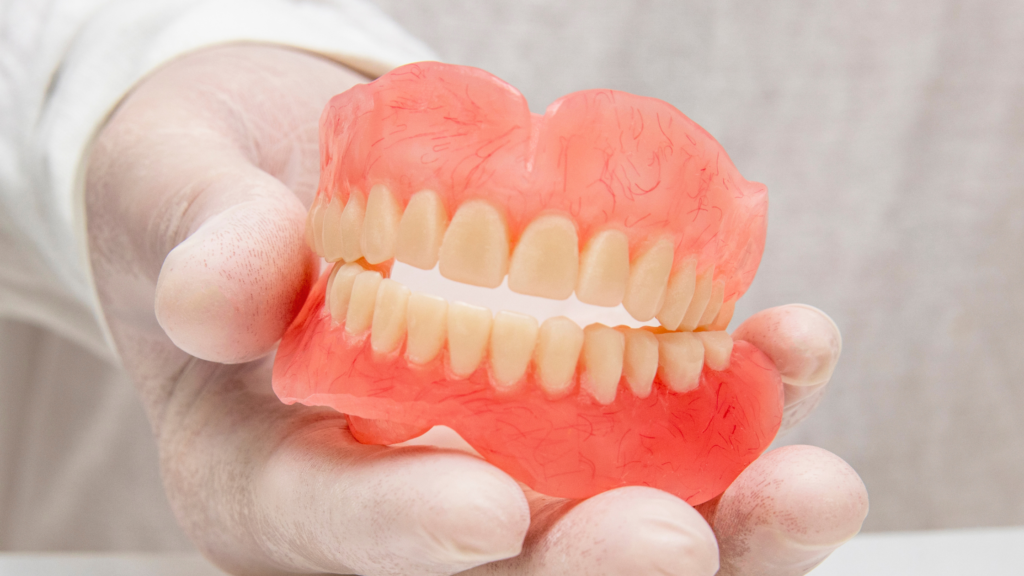
At their core, dentures are prosthetic replacements for missing teeth and the soft tissue that surrounds them. Some are removable, meaning you take them out at night. Others are anchored in place using dental implants and stay in your mouth much like natural teeth would.
But dentures are more than hardware. They serve two equally important roles in your daily life.
Aesthetically, a well-fitted denture restores facial volume. When teeth are lost, the jaw bone gradually shrinks, which causes the cheeks and lips to appear sunken or aged. Dentures fill that space back out, giving the face a fuller, more youthful contour.
Functionally, dentures allow you to eat foods you may have been avoiding for months or years, and to speak clearly without the awkward gaps that missing teeth create. Many patients tell us that getting properly fitted dentures feels like getting their old self back.
There are four primary types of dentures designed to restore your smile and dental function:
- Full (Complete) Dentures: Replace an entire arch of teeth and rest on the gum tissue.
- Partial Dentures: Used when some natural teeth remain; they clip onto existing teeth to fill gaps.
- Implant-Supported Dentures: Anchored to titanium posts in the jaw for maximum stability and bone health.
- Immediate Dentures: Provided on the same day as tooth extractions so you are never without teeth during healing.
The Main Types of Dentures Compared
Not all dentures are built the same, and choosing the wrong type for your situation can mean discomfort, extra costs, or unnecessary limitations down the road. Here is a clear breakdown of your main options.
Full (Complete) Dentures
Full dentures replace an entire arch of teeth, either the upper, lower, or both. They rest directly on the gum tissue and are held in place by suction, the natural contours of your mouth, and occasionally a dental adhesive.
These are typically recommended when all teeth in an arch are missing or need to be removed. There is a waiting period of several months after extractions, because the gum tissue and bone need time to heal and settle into their final shape before a permanent denture can be fitted accurately.
Partial Dentures
If you still have healthy natural teeth, a partial denture fills in the gaps without disturbing what is already working well. Partials are attached to your remaining teeth using metal clasps or precision attachments and are removed for cleaning.
This is often the most budget-friendly option for patients who are not missing an entire arch. Beyond cost, partials also help prevent the remaining natural teeth from drifting out of alignment, which is a common and underappreciated problem when gaps are left untreated.
Implant-Supported Dentures
Implant-supported dentures combine the coverage of a full denture with the stability of dental implants. Titanium posts are surgically placed into the jawbone and act as anchors for the denture, which snaps or locks into place over them.
This is widely considered the gold standard option for several reasons:
- They do not slip or shift during eating or speaking
- They stimulate the jawbone, which slows or prevents bone loss over time
- They feel significantly closer to natural teeth
- They eliminate the need for adhesives entirely
The upfront cost is higher, but for patients who are concerned about long-term bone health and want the most secure result, implant-supported dentures are often the most cost-effective investment over a lifetime.
Immediate Dentures
Immediate dentures are fabricated before your extractions take place and delivered the same day your teeth are removed. You never go a single day without teeth during the healing process.
There is an important trade-off to understand here. Because the denture is made before the healing process is complete, the fit will change as your gum tissue and bone remodel over the following months. Relines or adjustments are expected and should be factored into your planning. Think of immediate dentures as a transitional solution that keeps you functional and confident while your permanent denture is being finalized.
Choosing the Best Fit for Your Lifestyle
The “best” denture is not the most expensive one. It is the one that matches how you actually live.
Comfort and Bulk
Traditional full dentures cover the entire palate, which can feel bulky and affect taste. For patients who find this difficult to adapt to, implant-supported options can be designed with a reduced or entirely open palate, dramatically improving comfort and sensory experience. If palate coverage is a concern for you, bring it up early in your consultation so the design can accommodate it.
Speech and Eating
Partial dentures and implant-supported options consistently outperform conventional full dentures when it comes to natural speech and confident eating. With removable dentures, there is always some degree of adjustment required, and foods like corn on the cob or crusty bread may remain challenging long-term. If your social life revolves around shared meals, whether at the restaurants along South Main or family gatherings in the Lindenwood University area, it is worth investing in a more stable solution.
Long-Term Bone Health
This is the factor most patients do not hear about until it is too late. When teeth are removed, the jawbone no longer receives the stimulation it needs and begins to resorb, or shrink. Over five to ten years, this changes the shape of your face and causes your denture to fit poorly. Only implant-supported dentures actively prevent this process. Conventional dentures will require periodic relines as the bone changes beneath them, which adds to the long-term cost and inconvenience.
The Financial Side: Denture Costs and Longevity
Cost is one of the first questions we hear, and we think transparency here is critical. At Wilson Family Dental, we believe you should never feel surprised by a bill.
What Affects the Price
Denture costs vary based on several factors: the materials used, the complexity of your case, how many teeth need to be replaced, and whether implants are part of the treatment plan. Basic removable options sit at the more affordable end of the spectrum, while implant-supported dentures represent a larger upfront investment due to the surgical component and premium materials involved. Partial dentures generally fall somewhere in between, depending on the number of teeth being replaced and the type of attachments used.
The clearest way to understand what your specific treatment will cost is through a consultation, where we can look at your actual clinical situation rather than giving you a number that may not apply to you.
Insurance and Financing
Most dental insurance plans provide some level of coverage for dentures, but the details matter. Many plans cover a percentage of the cost up to an annual maximum, which may not fully cover premium materials or implant-related procedures. Review your plan’s language carefully and ask our team for help understanding what your specific coverage includes. We are glad to work through the details with you before any treatment begins.
For out-of-pocket costs, financing options are available to spread payments over time so that treatment is accessible without delay. Dr. Jerell’s background working with low-income and uninsured populations at the Douglas County Dental Clinic shaped his deep belief that financial limitations should never stand between a patient and necessary care. We are committed to helping you find a workable path forward.
The Real Cost Over Time
A lower upfront price does not always mean a lower total cost. Conventional removable dentures require periodic professional relines as the shape of your jaw changes over time, and they will eventually need to be replaced entirely. Those ongoing expenses add up. Implant-supported dentures carry a higher initial investment but often require fewer adjustments over the years and actively protect the bone structure beneath them, which reduces long-term complications.
This is not an argument for always choosing the most expensive option. It is an argument for understanding the full picture before you decide, which is exactly the kind of conversation we have with every patient who comes in to discuss their options.
Care and Maintenance for a Lasting Smile
Good denture care is straightforward, but a few common mistakes can shorten the life of your prosthetic significantly.
Daily Cleaning
Rinse your dentures after every meal to remove loose food particles. Once daily, brush them with a soft-bristle brush designed specifically for dentures and a non-abrasive denture cleaner. Avoid regular toothpaste. Most toothpastes contain mild abrasives that are perfectly safe for natural enamel but will scratch the acrylic surface of dentures over time, creating tiny grooves where bacteria can accumulate.
Overnight Soaking
Your dentures and your gums both need a break. Soaking dentures overnight in water or a denture-soaking solution keeps the material from drying out and warping. It also gives your gum tissue time to recover from the pressure of wearing the prosthetic all day. Dry storage causes acrylic to distort, and a warped denture will not fit the way it did when it was new.
Handling With Care
Most denture breaks happen in the bathroom, usually when a patient drops the denture onto a hard countertop or tile floor. When you are cleaning your dentures, work over a folded towel or a basin of water. The few seconds it takes to set that up can save you the cost and inconvenience of an emergency repair or replacement.
If a crack or chip does occur, do not attempt to repair it with household adhesive. Bring it to our office. Home repairs almost always make the damage worse and can affect the fit in ways that harm the underlying gum tissue.
Frequently Asked Questions
Do dentures hurt?
Some discomfort during the adjustment period is normal, particularly with new dentures or immediately following extractions. Your mouth is adapting to a new appliance, and minor soreness is expected. What is not normal is ongoing pain, sores that do not heal, or significant pressure points that persist after the initial weeks. If something feels wrong, contact us. Poorly fitted dentures do not get better on their own, and wearing an ill-fitting prosthetic can damage the underlying bone and tissue over time.
How long does it take to get used to dentures?
Most patients feel reasonably comfortable with their dentures within four to eight weeks. Speech tends to normalize within two to four weeks as the tongue adjusts. Eating takes longer, since you will need to relearn how to chew with a prosthetic rather than natural teeth. Starting with soft foods and gradually reintroducing more textured options helps speed that process significantly.
Can I sleep in my dentures?
You can, but most dental professionals recommend that you do not. Sleeping in dentures increases the risk of gum irritation, accelerated bone loss, and bacterial buildup. The exception is the immediate post-extraction period, when your dentist may specifically instruct you to keep them in as a protective measure during early healing. Otherwise, giving your gums at least six to eight hours of rest each night is the better long-term habit.
Your Next Step Starts With a Conversation
Dentures are not a one-size-fits-all solution, and reading a guide like this one, while a great start, is only the beginning. The type that is right for your neighbor on South Main Street may be completely different from what is right for you. Your bone structure, budget, remaining teeth, lifestyle habits, and long-term health goals all factor into the recommendation.
At Wilson Family Dental, Dr. Jerell and Dr. Madelyn Wilson approach every denture consultation as a collaborative conversation, not a sales pitch. As someone who has been part of the St. Charles community since his days at St. Charles High School, Dr. Jerell treats his patients the way he would want his own family members to be treated, with complete information, honest options, and a care plan that actually makes sense for their life.
Whether you are just beginning to explore your options or are ready to move forward after years of putting this off, we would love to be part of that journey with you. Call us at (636) 947-1800 or visit us at 2747 W Clay St D, St. Charles, MO 63301 to schedule your denture consultation. We serve patients from Main Street to Lindenwood University Area, Frenchtown to Lindenwood, Cave Springs to McClay, and every neighborhood in between.